Stay ahead of email threats
Get our latest DMARC, SPF, and email-security guides in your inbox. No spam — unsubscribe anytime.
We only use your email to send blog updates. One click unsubscribes you.

Your newsletter can put your invoices in spam
Your CRM, newsletter, helpdesk and accounting software all send as your domain, and all of them spend the same reputation. Why one badly-behaved or badly-configured tool can hurt everyone's mail, why subdomains limit the damage, and what a subdomain will not do.


p=none: the DMARC policy that looks compliant and stops nothing
Everyone agrees a domain with no DMARC record is dangerous. We think the more dangerous domain is the one at p=none: it passes the paperwork, and it still lets every forgery through — including into its own inboxes. Here is why, in plain language, and how long you should stay there.
You armoured the door — and let in anyone who says the right name
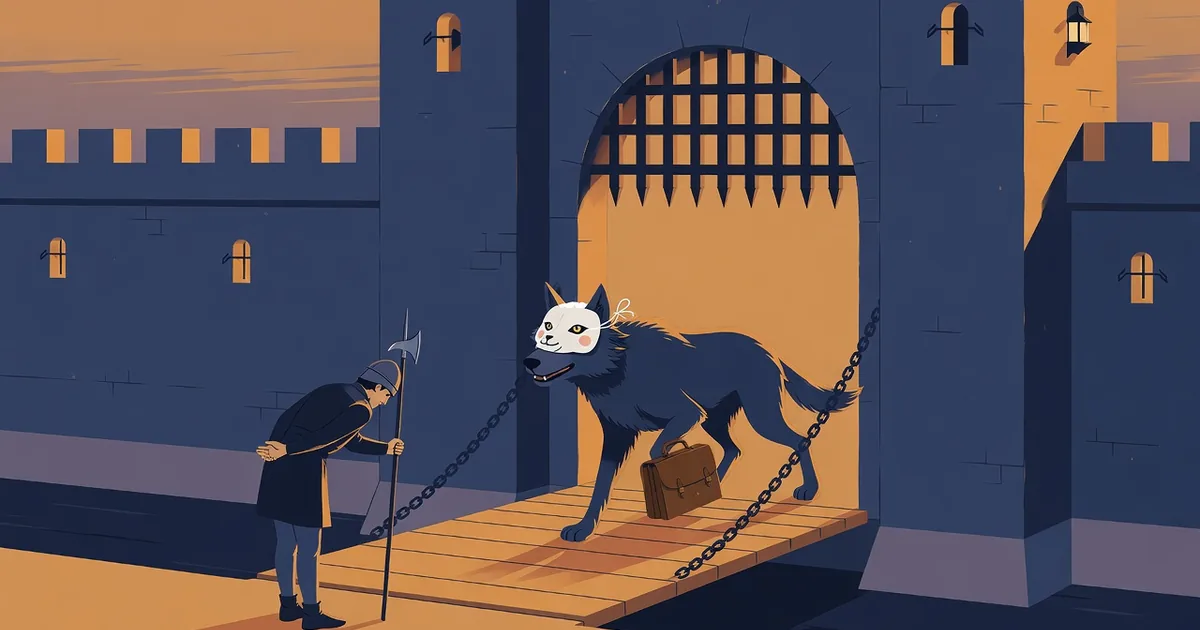
You published DMARC. Nobody can forge your domain — including to attack your own people internally. But almost none of that protects the mail that arrives in someone else's name: your suppliers, your accountant, your bank. Here is the blind spot in every email-security budget, and the three things that close it.
Your email passes DMARC — until something auto-forwards it
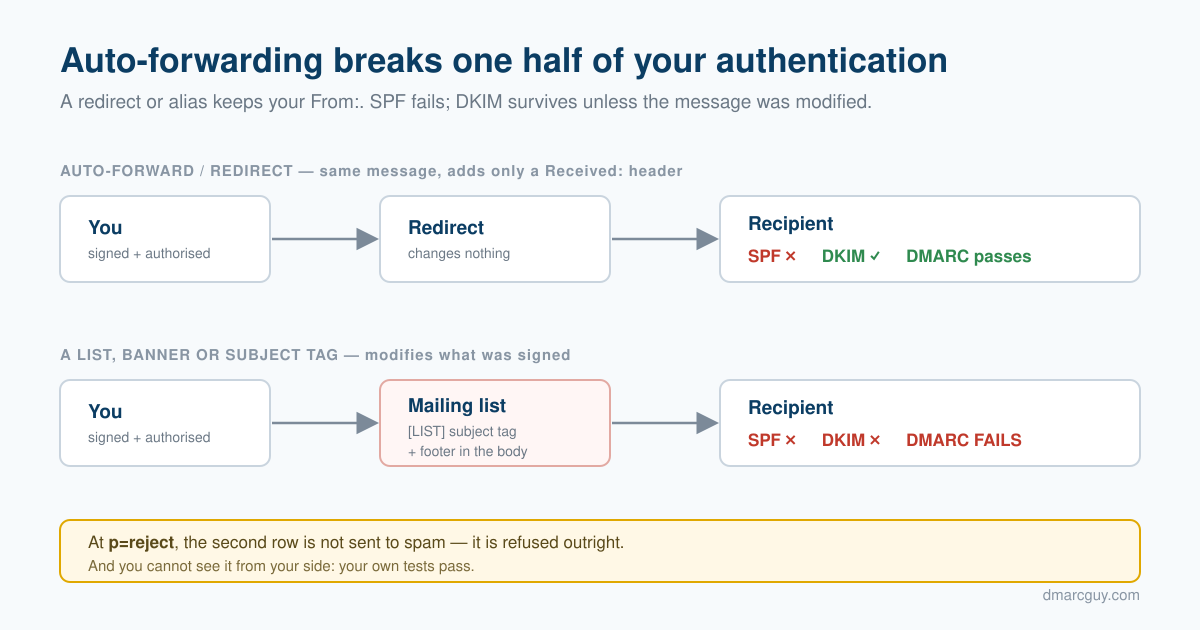
Your authentication tests clean, then a customer auto-forwards a message and it fails. That is not a bug, and it is not random. One half of your authentication cannot survive a new hop, and the other half survives only under a condition nobody tells you about.